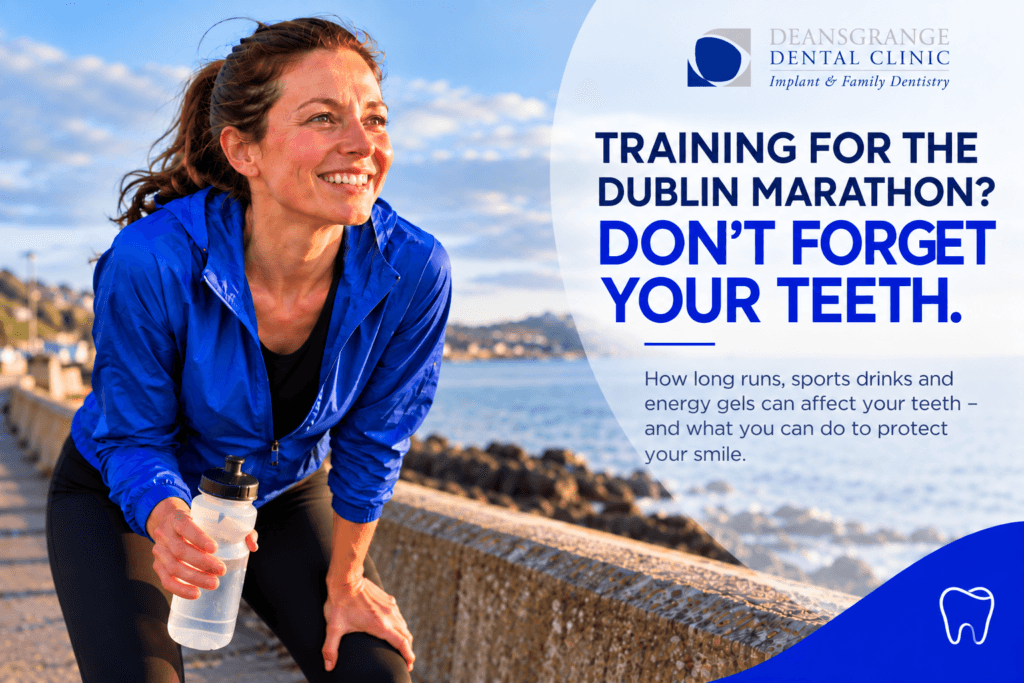
Training for the Dublin Marathon? Don’t Forget Your Teeth.
With the Dublin Marathon only weeks away, many of you are well into your long runs by now. You’re probably thinking carefully about your legs, your lungs, your fuelling and your recovery. Your teeth are usually the last thing on the list.
But they deserve a little attention too.
At Deansgrange Dental Clinic, we see patients who take excellent care of their fitness but are surprised to discover sensitivity, early decay or signs of enamel wear. Sometimes, their training and fuelling habits are contributing factors.
The good news? You don’t need to give up your sports drinks or energy gels. A few simple changes can help protect your teeth without compromising your training.

Why endurance training can be tough on your teeth
It’s not exercise itself that’s the problem. It’s a combination of three things that often come with longer training sessions.
1. Frequent sugar exposure
Energy gels, chews, sports drinks and energy bars are designed to deliver carbohydrates when your body needs them.
They’re useful for endurance athletes, particularly during longer sessions. However, every time you consume something containing fermentable sugars, bacteria in your mouth can produce acids that attack your enamel.
When you’re taking a gel every 30–45 minutes or regularly sipping a sports drink, your teeth can experience repeated acid attacks over several hours.
For dental health, how frequently you expose your teeth to sugar matters, not just your total daily intake.
2. Acidic sports drinks
Many popular sports drinks are acidic, regardless of whether they contain sugar.
Acid can temporarily soften the outer surface of your enamel. Repeated exposure, particularly during long training sessions, can contribute to dental erosion over time.
This is different from tooth decay, but both can gradually damage your teeth.
3. A dry mouth
During a long run, particularly when you’re breathing heavily through your mouth or becoming dehydrated, saliva production and oral moisture can be affected.
Saliva is one of your mouth’s natural defences. It helps wash away food particles, dilute sugars and neutralise acids.
When your mouth becomes dry, those protective effects are reduced.
And this isn’t simply a theoretical concern. Research involving elite athletes, including competitors at the London 2012 Olympic Games, has highlighted the prevalence of oral health problems among athletes. Some participants also reported that dental problems negatively affected their training and performance.
You don’t have to be an Olympian for your training habits to affect your teeth.
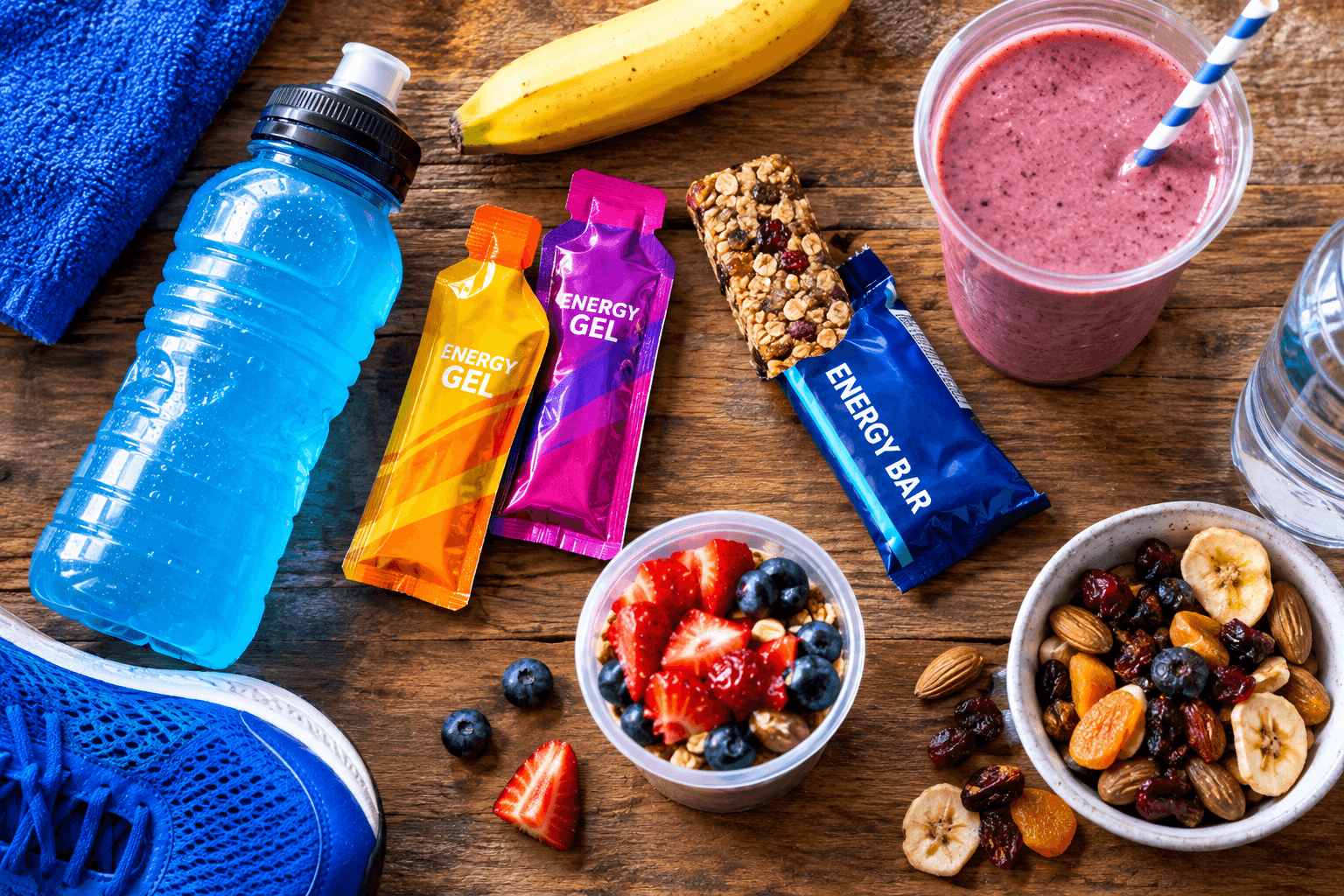
The hidden sugars in your training routine
It’s not just the gels you take during a marathon that deserve attention.
Many foods and drinks associated with an active lifestyle contain sugars or acids that can affect oral health, particularly when consumed frequently.
-
Sports and energy drinks: Some 500ml sports drinks contain approximately seven teaspoons of sugar. Please check the nutritional information, as formulations vary.
-
Protein and energy bars: Many contain syrups, honey, dried fruit or other concentrated sources of sugar.
-
Smoothies and fruit juices: These can contain free sugars and natural acids, especially when sipped over an extended period.
-
Flavoured waters and recovery shakes: Some contain added sugars, while others are acidic even when labelled sugar-free.
-
Dried fruit and natural snacks: Sticky dried fruit can remain in contact with teeth for longer than you might expect.
None of this means these products are automatically bad choices.
Carbohydrate fuelling has an important place in endurance training. The key is understanding when you need it, avoiding unnecessary sugar exposure throughout the rest of the day, and taking a few precautions to protect your teeth.
Seven simple ways to protect your teeth while marathon training
You don’t need an entirely new dental routine just because you’re increasing your mileage.
A few small habits can make a meaningful difference.
1. Rinse with plain water after gels and sports drinks.
A quick mouthful of water after consuming a gel or sports drink helps dilute and clear residual sugars and acids.
2. Carry water alongside your sports drink.
For longer sessions, follow your individual hydration and fuelling plan, but use plain water between carbohydrate drinks when practical.
3. Avoid sipping sports drinks throughout the day.
Use them when your training requires them rather than treating them as an everyday desk drink.
4. Don’t brush immediately after acidic drinks.
If you’ve been consuming acidic sports drinks, rinse with water and allow your mouth time to recover. Waiting around 30–60 minutes before brushing is a sensible precaution.
5. Use fluoride toothpaste twice daily.
Choose a toothpaste containing an appropriate fluoride concentration. After brushing, spit out the excess rather than rinsing immediately with water. This helps keep fluoride in contact with your teeth.
6. Try sugar-free gum after training.
Chewing sugar-free gum can stimulate saliva production, helping your mouth return to its normal protective state.
7. Keep up with your dental check-ups.
Early signs of enamel erosion, tooth decay or sensitivity aren’t always obvious.
A routine examination can identify potential problems before they become more uncomfortable or complicated to treat.
What about cycling, rugby and other sports?
While marathon training brings its own oral health considerations, other sports introduce a different risk: dental injuries.
Mountain biking, rugby, hockey, martial arts and other activities involving falls, collisions or physical contact can result in chipped, fractured or knocked-out teeth.
For sports where dental injuries are a recognised risk, wearing a properly fitted mouthguard is an important protective measure.
A custom-made sports mouthguard from your dentist is designed to fit your teeth closely, providing a secure and comfortable option.
What should you do if a tooth gets knocked out?
If a permanent (adult) tooth is knocked out, seek emergency dental treatment immediately.
Handle the tooth by the crown, never the root. If it is dirty, gently rinse it without scrubbing. Where possible, carefully reposition it in its socket; otherwise, keep it moist in milk while travelling to the dentist.
Time matters, particularly during the first 30–60 minutes, so don’t wait for a routine appointment.

Keep your smile in shape for race day
You’ve put months of work into preparing for the Dublin Marathon. Looking after your teeth should be part of looking after the rest of your body.
Whether you’re building towards your first marathon, regularly taking part in endurance events or simply enjoying an active lifestyle, a little awareness around sports nutrition and oral health can go a long way.
And if you’ve noticed new sensitivity, discomfort or changes to your teeth during training, it’s worth getting them checked.

We’re here to help
At Deansgrange Dental Clinic, we’re happy to advise runners, cyclists and other active patients on protecting their oral health.
Whether you’d like a routine dental examination, advice about enamel erosion or a custom-made sports mouthguard, our team is here to help.
Call us on 01 558 0000 or email info@deansgrangedental.ie to arrange an appointment.
Best of luck to everyone lining up for the Dublin Marathon this October. Enjoy the experience, look after yourselves and keep smiling!